
Stop Toxic Sewage Sludge
We must stop spreading toxic sewage sludge on farmland.
The problem
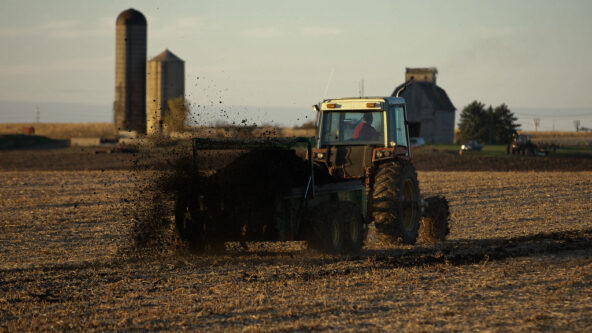
Sewage sludge, also known as biosolids, is a by-product of wastewater and sewage treatment. Treated sewage sludge is commonly spread on agricultural land because it contains nutrients, but it also contains a mixture of potentially hazardous contaminants that are not destroyed during treatment.
In 2024, Scotland applied 72,235 tonnes of sewage sludge to agricultural land.1
Sewage sludge is different to slurry, which is often spread on agricultural land. Slurry generally is a mix of animal manure and water.
For decades, people living near sewage sludge spreading have had concerns about:
- contaminated crops, soil, water and air
- the harm to grazing animals and wildlife
- the potential health effects from the environmental accumulation and release of contaminants
- living with the unbearable smells and respiratory issues.
A number of EU member states and U.S. states have introduced a ban or restrictions on the use of sewage sludge because of its risk to human, animal and environmental health.
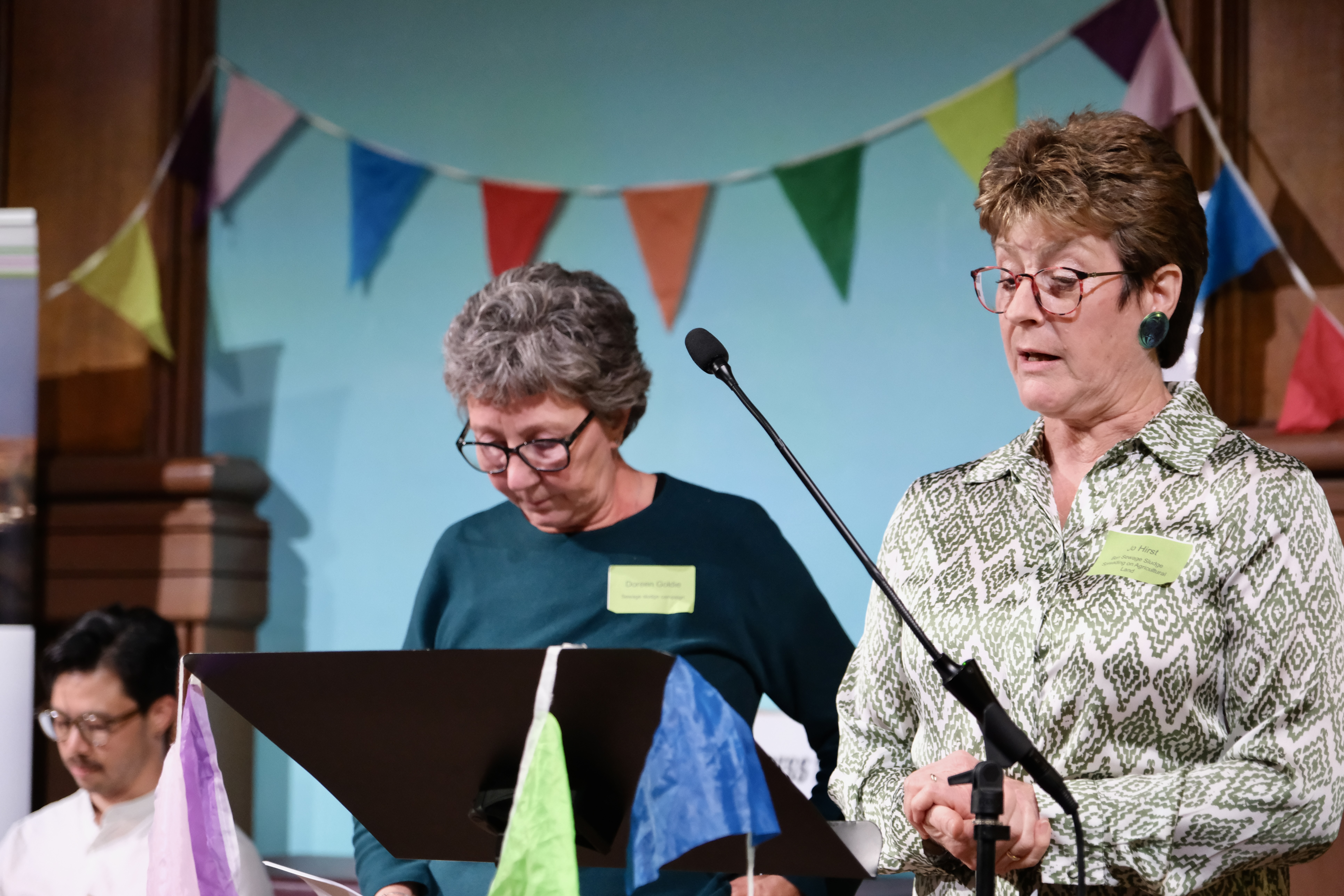
ERCS has been working with community campaigners Jo Hirst and Doreen Goldie, and Fidra, to highlight the risks of sewage sludge spreading. Fidra is an environmental charity working with the public, industry and governments to deliver pragmatic, evidence-based solutions to pollution.
Jo & Doreen – our Tenacious Campaigners
Jo Hirst and Doreen Goldie first looked into the use of sewage sludge in 2009 as community councillors, when local residents complained of unbearable smells from nearby spreading. As they investigated, they uncovered issues across neighbouring areas and further afield in Aberdeen, Perthshire, Stirling, Renfrewshire, East Lothian, Dumfries and Galloway and Fife, as far back as 2004.
Jo and Doreen have been recognised by the Tenacious Awards for their skill and determination in fighting environmental injustice and driving change.
Take Action
We want to find out how many communities are affected by sewage sludge so that we can show the Scottish Government the impact and why it needs to stop.
Has sewage sludge spreading affected you or someone you know?
What needs to change
- Stop all imports of sewage sludge to Scotland.
- Introduce a moratorium until the risks and alternatives to sewage sludge spreading are investigated and harmful contaminants removed.
- Align with the Urban Wastewater Directive (EU) 2024/3019 set to take effect in August 2027 and:
- Introduce monitoring of microplastics and PFAS in wastewater and mandating quaternary (advanced) treatment of wastewater to remove micropollutants such as pharmaceuticals.
- Introduce an extended producer responsibility scheme, where producers of products that release micropollutants into urban wastewater must fund at least 80% of the costs of quaternary (advanced) treatment to remove these pollutants.
- Monitor and investigate the potential harm of unregulated known and emerging contaminants in sewage sludge and wastewater.
- Invest in source control measures to reduce harmful contaminants (e.g. a full ban of PFAS chemicals).


Jo & Doreen’s campaign timeline
Find out more about Jo and Doreen’s tenacity in raising awareness of sewage sludge.
ERCS and Fidra publish a joint briefing on ‘The risks of sewage sludge spreading on agricultural land and the need to re-evaluate’.
The new regulations come into force in November, but they do not go far enough to address concerns over monitoring and enforcement, the duty to carry out inspections, animal health and understanding the risks of all toxic contaminants in sewage sludge.
New regulations for sewage sludge spreading under the Environmental Authorisations (Scotland) Regulations 2018 proposed amendments go out for consultation in December.
ERCS responds, including an additional response requested by the Net Zero, Energy and Transport Committee.
ERCS submitted a representation to Environmental Standards Scotland regarding the failure to implement the recommendations of the Sludge Review.
Doreen and Jo contacted ERCS for legal advice on sewage sludge spreading on agricultural land.
In response to continued complaints from ASCC, the Scottish Government commissioned The James Hutton Institute to produce The spreading of sewage sludge to land (CR/2016/23), an updated health risk assessment of sewage sludge that includes odours.
The UN Special Rapporteur publishes a report on The implications for human rights of the environmentally sound management and disposal of hazardous substances and wastes on his mission to the United Kingdom of Great Britain and Northern Ireland: comments by the State.
This includes mentions of ASCC’s contact with the Scottish Government, the 2016 Sludge Review and its 21 recommendations. It states SEPA’s recognition of the issues and the steps that it will take to enact the recommendations.
The Review of the storage and spreading of sewage sludge on land in Scotland (Sludge Review) with 21 recommendations is published by the Scottish Government.
A petition (PE01563) concerning the practice of sewage sludge spreading is raised with the Scottish Government by ASCC.
Avonbridge and Standburn Community Council (ASCC) and six other community councils wrote a letter to the Scottish Government raising concerns about the impacts on human health and a lack of effective regulation.
Petition raised in the Scottish Government by communities in the Borders concerned with sewage sludge spreading.
Updates
Blogs & news

Stop Toxic Sewage Sludge Spreading: Tenacious campaigners call for cases
Tenacious Award Winners, Jo Hirst and Doreen Goldie, are working with ERCS to call for a moratorium on toxic sewage sludge spreading on agricultural land. They are calling for cases of sewage sludge spreading in Scotland to support the campaign …
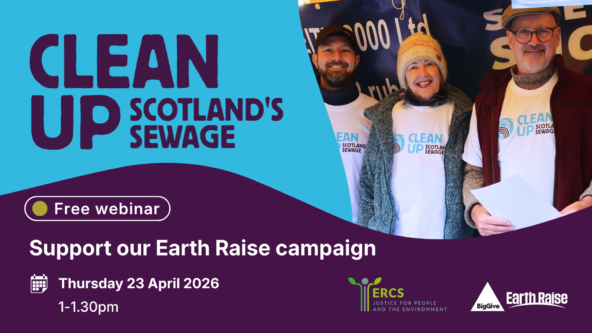
Clean Up Scotland’s Sewage: Support our Earth Raise campaign
Between 22-29 April, we’re participating in the Big Give Earth Raise to help fund the next phase of Clean Up Scotland’s Sewage. Watch our 30-minute webinar to find out why your donation is so important …
The risks of sewage sludge spreading on land and the need to re-evaluate
ERCS and Fidra are calling for a moratorium on sewage sludge spreading on agricultural land amid increasing concerns about risks to the environment and human health …

Lunchtime 101: Sewage sludge on farmland
What are the environmental and health risks of spreading sewage sludge on farmland? Watch our free lunchtime webinar …

Sewage sludge spreading – the harm and fight for improved regulation
Read how community representatives, Doreen and Jo, have been at the forefront of public action against sewage sludge for more than a decade …
Resources
Fidra resources
Get the latest updates
Join our mailing list to stay up to date on the campaign to Stop Toxic Sewage Sludge.
- WICS (2024) Water Industry Commission for Scotland (WICS) Annual Return 2024/25, 2024-25 E tables ↩︎
Header photo: Sewage sludge by Jo Hirst and Doreen Goldie.