This year is critical for tackling sewage pollution. In May, the next Scottish Government will set its priorities for the water industry and decide how the water environment will be managed until 2033.
Launched in November, our campaign to Clean Up Scotland’s Sewage highlights systemic issues in the regulation of sewer overflows. Communities are left unheard while sewage continues to be discharged to their local rivers and beaches.
Our briefing outlines gaps in laws meant to prevent pollution, and weaknesses in their enforcement. Our manifesto asks for the new government are:
- Make pollution visible
- Stop routine pollution
- Hold polluters to account
- Build in resilience
In England and Wales, the sewage scandal has captured national attention with the TV series Dirty Business making headlines and a Water Reform Bill in the works. In Scotland, however, similar issues have received far less public attention and political commitment for reform.
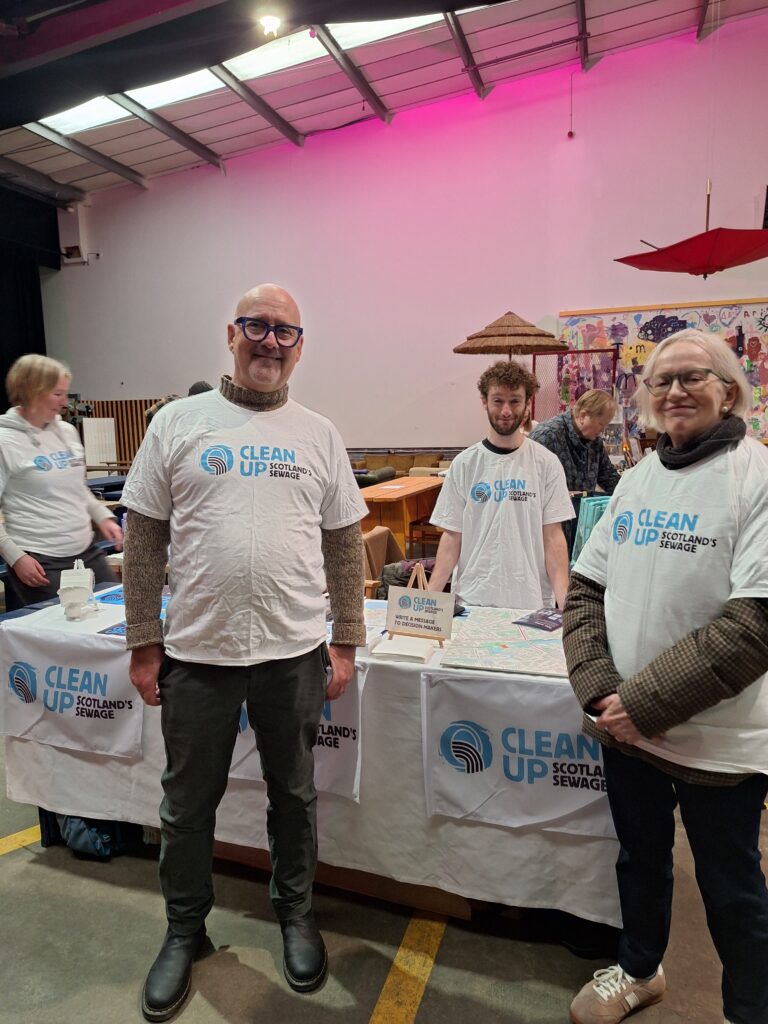
In the last three months, we have been speaking to communities to hear their concerns, so we can push for better regulations. We had an amazing response with people coming to meet us on World Water Day at Granton, writing postcards to the Scottish Government and their MSPs. Find out how you can take action.
Here is a recap on why this campaign is important and how you can help fund the next phase with our Earth Raise fundraiser 22 – 29 April.

Sewage pollution is an environmental rights issue
Sewage pollution is a threat to our right to safe water and sanitation, which is part of the human right to a healthy environment. Water is recognised as a fundamental right by the UN Committee on Economic, Social and Cultural Rights.1 To uphold it, States must protect waterways from pollution.2
However, recognition of our right to safe water and sanitation is largely missing from how public bodies respond to people’s concerns about sewage pollution.
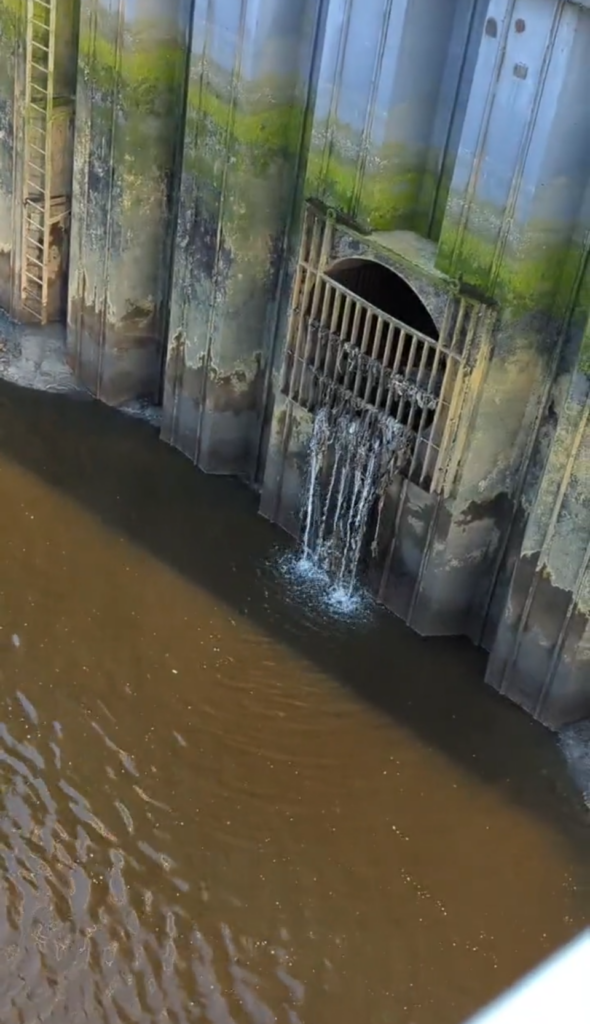
This is particularly clear in sewer overflow monitoring. Only 34% of Scotland’s sewer overflows are monitored as opposed to almost 100% in England and Wales.3 In response to our call for 100% monitoring, Scottish Water stated that monitoring overflows,
“without generating any environmental benefit is unlikely to represent good value for customers”.4
Under the Aarhus Convention, we have the right to access environmental information. Without monitoring, we do not know when a sewage spill presents a risk at our local river or beach. Monitoring creates accountability.
1. Make pollution visible: Introduce 100% monitoring of all sewer overflows so that we know how often our waterways are being polluted.
We need transformational change
The last Scottish Government claimed that we already have,
“a robust regulatory framework in place that is delivering good environmental outcomes”.5
But communities’ experiences of sewage pollution show otherwise, with billions of litres of sewage spilled every year,6 and sewage litter strewn across beaches.
The good news is that we know regulation can work. Scotland’s current sewer system, developed through regulation, has significantly improved environmental and public health.7
Now though, with population growth, aging infrastructure and climate change, the sewer system is under increasing pressure. In contrast to updated EU legislation, our regulation is falling behind in tackling new pollutants including PFAS and microplastics.
2. Stop routine pollution: Match the new EU standards for surface water quality and wastewater treatment to safeguard human and environmental health.
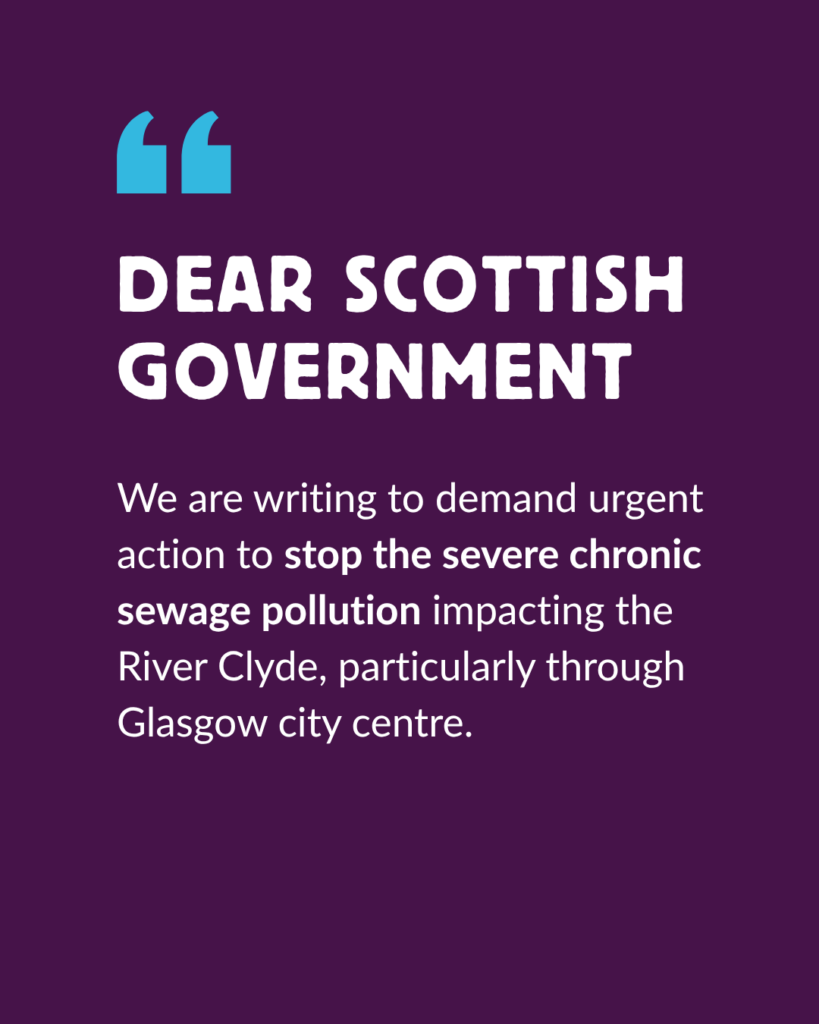
The postcards collected already show that people in Scotland care deeply about sewage pollution. For us, our local beaches are not just ‘receiving waters’ for sewage, and wet wipes on riverbanks are not just ‘an aesthetic impact’ – which is how regulation sees it.8
3. Hold polluters to account: Review the resources and enforcement of our current regulations to give public bodies the tools to protect our waterways.
To tackle water pollution, we need a national conversation on how to make transformational change.
4. Build in resilience: Set interim targets for 2030 to invest in blue-green infrastructure to reduce sewage spills.
Next steps for Clean Up Scotland’s Sewage campaign
We are creating a public mandate to tackle sewage pollution.
Our petition has been signed by hundreds of people, including over 50 organisations which represent thousands more. Thanks to the great work of community groups and coordinated advocacy efforts with friends including the Marine Conservation Society and Surfers Against Sewage, most of the Scottish Party manifestos recognise we need action.
But there is so much more to do.
As well as improving regulations for sewer overflows, we need to tackle the pollution from sewage sludge spreading on agricultural land. We want to work with more communities to use their environmental rights, hold polluters to account and press the Scottish Government to clean up.
We need your help. During 22-29 April, we are taking part in the Big Give Earth Raise fundraiser to help fund the next phase of the campaign. For one week, all donations are doubled towards our goal of raising £10,000.
We really appreciate anything you can do to support us!
- United Nations Committee on Economic, Social and Cultural Rights (2002) General Comment No. 15: The right to water (arts. 11 and 12 of the International Covenant on Economic, Social and Cultural Rights), paragraph 1. ↩︎
- United Nations Committee on Economic, Social and Cultural Rights (2002) General Comment No. 15: The right to water (arts. 11 and 12 of the International Covenant on Economic, Social and Cultural Rights), paragraphs 8 & 23. ↩︎
- Scottish Environment LINK (November 2025) Restoring Scotland’s Waters LINK’s priorities for Scotland’s next River Basin Management Plan, p7. ↩︎
- Scottish Parliament (16 November 2025) Question reference: S6W-42347. ↩︎
- The Herald (23 November 2025) Calls for action over Scotland’s ‘toothless’ sewage plan. ↩︎
- Scottish Water (2025) Scottish Water Overflow Event Data to SEPA 2020-2024 & Summary; Scottish Water (2025) Scottish Water Non-Reported Overflow Event Data & Summary 2022 – 2024. ↩︎
- SPICe/Lawson & Davies (October 2025) Scotland’s water industry: overview of regulation and key challenges. ↩︎
- Scottish Environment Protection Agency (August 2025) WAT-G-058: EASR Guidance: Sewer Overflows. ↩︎